
Professional Councils
Professional councils are established to set norms and standards in many professions. They are also there to protect the public from professional misconduct by their members. But do they work? In this post we will look at the Legal Practice Council (LPC), the Engineering Council of South Africa (ECSA) and the National Home Builders Registration Council (NHBRC). We also look at whether the councils’ disciplinary processes are effective. And can the victims of professional misconduct get some degree of closure?
Our house building nightmare brings into question the ethics and standards of the builder/developer, engineer and attorney involved and their professional councils.
- The Legal Practice Council (LPC) is investigating the builder’s attorney.
- ECSA investigated the builder’s engineer.
- The NHBRC is investigating numerous complaints against the developer/builder.
To put this post into context, read our home page On Rocky Ground and How We Got Here.
Who do professional councils protect?
- Do they protect the very professionals who subscribe and pay their registration fees?
- Or, do they protect the public from professional misconduct and abuse by these professionals?
- Who should the professional councils protect?
After all, being a professional does not automatically mean you have the highest standards of ethics and honesty. It is a utopian ideal to strive for, but the ideal is likely to remain just that, an ideal that is unattainable.
Professional Council – Lawyers

Legal Practice Council (LPC)
The Legal Practice Council is mandated to set norms and standards, to provide for the admission and enrolment of legal practitioners and to regulate the professional conduct of legal practitioners to ensure accountability.
Code of Conduct
To quote Part II of the Legal Practice Council Code of Conduct
3. Legal practitioners, … shall –
3.1 maintain the highest standards of honesty and integrity; …
3.3 treat the interests of their clients as paramount, .. subject always to: …
3.3.4 the maintenance of the ethical standards prescribed by this code, and any ethical standards generally recognised by the profession;
For more information about the Legal Practice Council, click LPC Homepage. The homepage says all the right things, the stuff we want to hear, but are they living up to their own ideals? I have yet to find anyone who praises their work. There are critics galore from judges and attorneys to legal journalists.
GroundUp and the LPC
On 8 November 2021, Tania Broughton of GroundUp wrote in her article “High Court Warns Legal Practice Council”:
- The Cape High Court has directed the Legal Practice Council (LPC) to investigate its systemic failures and report back in three months.
- This comes after the LPC and its predecessor did nothing for eight years to strike off a delinquent attorney.
To do nothing for 8 years is shameful – how many others were harmed by this delinquent attorney in the 8 years of inaction?
Western Cape High Court judges Mark Sher and Lee Bozalek said of the LPC:
If practitioners who contravene the rules are not dealt with promptly and effectively … a culture of impunity is fostered and the profession is lowered in the eyes of the public.
We hope the LPC will take this both as a warning and an opportunity to get its house in order.
To read the full article and the judgement, click here.
Not only has the LPC been told to get its house in order, but GroundUp is exposing a further high profile case where the LPC’s inadequacies are again exposed. The case is of attorney Lesley Ramulifho and the Lottery corruption probe. Read the full article of 3 May 2021 exposing these shenanigans in court. To quote the headline:
Incompetent LPC decision has given the green light to lawyers who wish to commit fraud.
With GroundUp’s litigation and the words of judges Mark Sher and Lee Bozalek hopefully the LPC will finally get its house in order.

Our Encounters with the LPC
Misappropriation of Trust Funds
In March 2020 we submitted a complaint to the LPC of the Western Cape. Each province deals with the practitioners in its area. As our house building disaster is in the Western Cape that is the jurisdictional area for the matter. Most people thought we were wasting our time reporting the attorney. After all these months, I wonder if they were right? Sadly, what I read in GroundUp confirms that we may well have been wasting our time.
We began with a simple matter. The conveyancing attorney paid the fifth and final payment to the builder without the payment criteria being met. The payment should only have been made after the builder obtained an occupation certificate. Our post on the Building Agreement shows all the conditions to be met for drawdowns and payments.
Final Payment Clause states:
Fifth and final payment being 10% of the purchase price .. to be paid upon obtaining the Occupation Certificate.
The builder knew there was no Occupation certificate. The conveyancer knew there was no Occupation certificate. And yet, the conveyancer paid the final amount from our monies held in her Trust account. Also, the builder/developer accepted the payment knowing they were not entitled to it! After numerous requests the attorney has failed consistently to answer any question regarding the fifth payment.
Misappropriation of trust funds is serious professional misconduct. Will the Legal Practice Council ensure we get the interest that is due to us?
Will the Punishment Fit the Crime?
If the LPC fines the attorney, that does not benefit us. When the damage caused through misconduct can be many thousands of rands, can the LPC make the punishment fit the crime? Can they force the attorney to claim from the indemnity fund so the victim receives compensation?
Further Misappropriation of trust Funds
This attorney paid money to her client, the developer/builder from our funds held in her Trust account.
- No monies should have been paid out prior to registration of transfer.
- As she is the conveyancing attorney for the developer, the attorney knows exactly when transfers take place.
- However she decided to pay her client prior to transfer, enabling the builder to start building when he had no right to build.
- She continued to pay the builder, still prior to transfer, without our knowledge and without draw forms.
- This meant the builder could continue building when he had no right to build. If the builder had not been paid he could not have been building.
This attorney’s professional misconduct has had dire consequences, but will the Legal Practice Council see it that way?

The disciplinary committee heard the case on 2nd July 2021. The committee disbanded a year later without ever concluding the disciplinary processes. A new investigating committee discussed the matter on 12th July 2022. This committee, like the previous, has also given the attorney extra time to answer questions. Now we wait till 8th August 2022 but I won’t hold my breath!
I am told members of the disciplinary committee are volunteers and they run their own legal practices and “cannot be hurried”. Members of the disciplinary committee should not be there unless they are committed to seeing matters through to the end in a timely fashion.
This professional council has a very checkered history. As a victim of professional misconduct that is no comfort.
Professional Council – Engineers

The Engineering Council of South Africa (ECSA)
ECSA’s vision statement is to be “an effective regulator assuring engineering excellence.”
Vision
ECSA seeks to achieve this vision through:
- Determining engineering standards for education, accreditation and registration;
- Registration of Engineering practitioners;
- Developing and sustaining .. practice standards;
- Enforcing compliance ..;
Values
- Professional – Conduct beyond reproach to the highest ethical standards underpinned by integrity, quality, timeliness, trust and respect.
- Accountable – Doing what we commit to do .. and being answerable for our failures .. .
- Collaborative – .. to achieve exceptional results.
- Transparent – Honest and open communication and sharing of information between stakeholders.
- Innovation
Opening a Case of Professional Misconduct
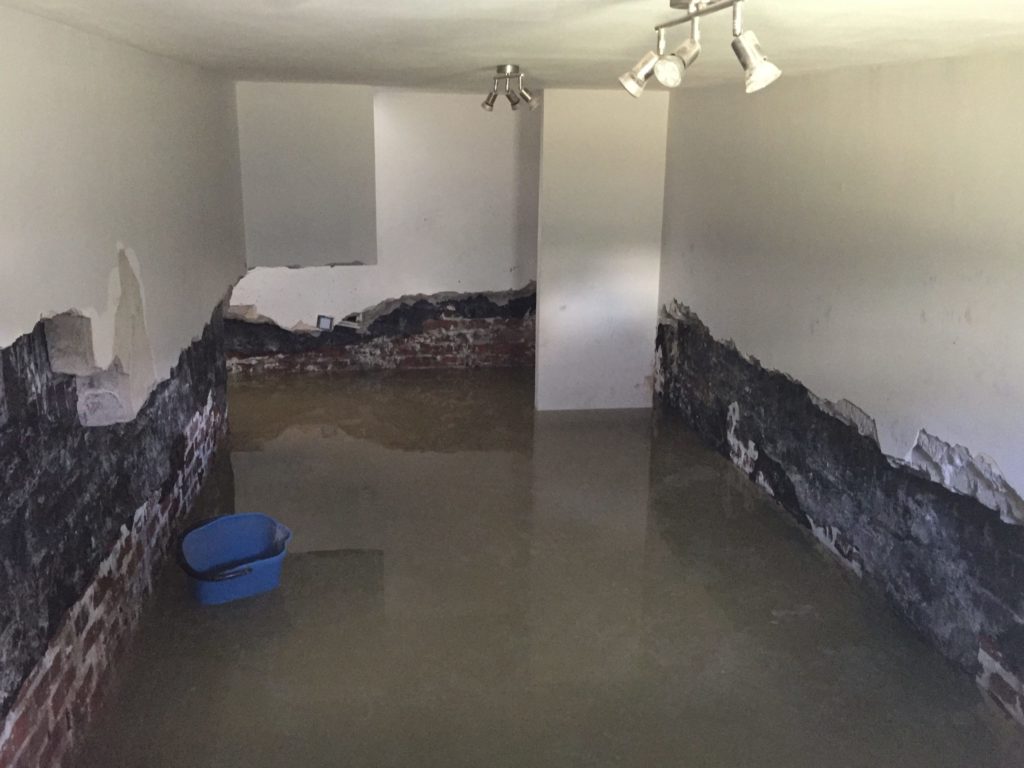
In June 2020 we opened a case of misconduct with ECSA against the engineer. Why? He signed off the agricultural drain for the cellar without seeing it. He signed it off even when he knew it had been installed incorrectly. As the cellar ended up under about 600mm of water for months on end, that sign-off has had major ramifications. The engineer attended the remedial works during July 2020. However the cellar continues to have severe damp issues.
At the end of July 2020 ECSA sent me the name of the engineer appointed to investigate our complaint. A few days later the inspector called. He knew my number and he knew how to contact me.


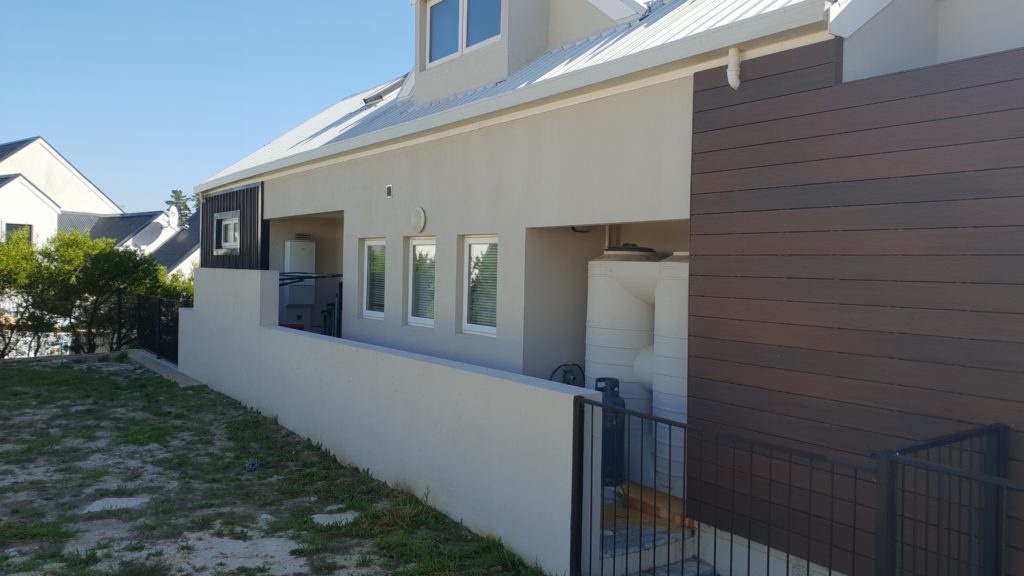
Pictures taken by the inspector.
The Inspector and Trespass
We heard nothing more till 1 April 2021 when, out of the blue, the inspector called me.
- He called to say he had been to the house and had walked around the outside taking photos.
- He did not ask permission nor did he request access into the house.
- These actions by the inspector may also be considered to be professional misconduct and even trespass.
- Would you go to someone’s house, uninvited and unexpected, and walk around taking photos?
What was the point of walking around the outside? The cellar is inside and to see the problem roof structure the access is through the ceiling inside!
The next thing we heard from ECSA regarding the engineer (respondent) was:
There is no evidence that the Respondent transgressed any rule of the Code of Conduct for Registered Persons.
So, signing off part of a building without seeing it and knowing it was not ideal, is OK? Really? And changing a roof structure so rooms do not comply is not professional misconduct?
Is this Professional Council protecting the public or is it protecting its registered members?
- We still have a damp cellar when this engineer signed off the agricultural drain without seeing it.
- We still have a house we cannot live in.
- The engineer was involved in re-designing the roof.
- The redesigned roof resulted in the bedroom not complying with SANS 10400 for a bedroom and no occupation certificate being issued. (For more on the occupation certificate read our blog The Building Inspector.)
- Did this engineer really uphold the standards of the ECSA code of conduct?
- Is trespass by the ECSA inspector acceptable?
Profession Council – Home Builders

The National Home Builders Registration Council (NHBRC)
The council was set up in 1998, to standardize and formalize the building industry. We have found the NHBRC truly willing to help. But they are also constrained in what they can and cannot do. Take a look at our post on the National Home Builders Registration Council (NHBRC).
Complaint – Non-Enrolment of a Home Build
The disciplinary hearing found the builder guilty on the charge of non-enrolment of our house build. But, that has not yet brought any positive result. We still have a non-enrolled house and we still have a house we cannot occupy.
Complaints – Not Upholding the NHBRC Guidelines and Much More
The Builder failed to:
- conduct business in an honest and fair manner;
- honour all obligations imposed on a Home Builder in terms of the Act;
- comply with all duties of a Home Builder set out in the Act;
- enrol the home build with the NHBRC;
- notify the NHBRC 15 days prior to commencement of building works.
This builder began building:
- without building plans approved by the Local Authority, and
- prior to transfer of the land.
In our case the builder was paid in full prior to transfer and without enrolling the build.
The Builder failed to:
- build to acceptable standards;
- provide a home fit for purpose;
- complete the build in the agreed time;
- obtain an Occupation Certificate.
Contrary to the Building Agreement, the Builder varied terms of the Agreement without our consent.
No resile clause:
There is no resile clause in the Building Agreement. A resile clause allows the housing consumer to resile from the contract if the builder does not complete the building within the specified time. In our case the builder specified the time of 8 months. It is now more than 4 years later and we still cannot occupy the house.
Conclusion
It is really important to have regulators to ensure ethical behaviour and to protect the public. We need protection against professional misconduct and abuse by those we trust. But, are the councils fulfilling their roles and are they affective?
If you have a good or bad experiences with any of the professional councils, please comment.
I have an ongoing problem, where a NHBRC registered building contractor, who has been paid in full, and who has stopped work after completing the brickwork of a NHBRC registered new house. He keeps saying he’s going to site etc for over a year now. Complaint to NHBRC, as yet no action, builder has not returned. After the brickwork was completed, the builder requested deposits to complete the house, but did nothing, but provide excuses. I was under the belief that the NHBRC would ensure completion of the building
The NHBRC is very slow to react and help the home owner and yet the very purpose of the NHBRC is to protect us home owners from errant builders.
It has taken years of constant hassling from our side for the NHBRC to get the builder to a disciplinary hearing. They were suspended for non-enrolment. Now we have 18 complaints against the builder because not only did the builder not enrol our house, he also did not build according to the approved building plan. After 5 years and a costly litigation battle (that the builder started) we still do not have finality and we still have no occupation certificate. And yes, the builder has been paid in full.
Have you tried going into the NHBRC offices? I cannot say it will help but maybe a face to face meeting will get you the name of someone who can help.
What area are you in? I have some contacts in the Western Cape office.
Dear Sir/ Madam
February 2017 I logged a complaint against Attorney Herman Potgieter, complaint number 10082017. Herman Potgieter did not have or attached any evidence to his response to the complaint. I on the other hand attached all my evidence to complaint, but I was never given the opportunity to argue/ present my case to the LPC board of directors. Instead in March 2018 I received an email / post from Mr Willem Wolmarans stating that he could not find any irregularities done by Mr Potgieter. But Mr Potgieter did not attached any evidence and my right to represent myself to the lpc board was taken away from me.
I paid Mr Potgieter +- R250k to represent me in my case against Absa Bank. Instead Mr Potgieter was professionally negligent with case, misrepresented me, used delayed tactics and after dragging my case for 4 years he withdrew himself from my case. Same thing happened with attorney Thabile complaint number 13842023. Is there anyone that can assist me in this matter?
Kind regards
Chantel Flusk
Dear Chantel
The LPC should be protecting us from errant legal professionals but it seems they do little to help us.
We had several complaints lodged with the legal practice council of the Western Cape against the conveyancer and litigation attorney for the builder/developer. Our building disaster is the heart of this litigation saga. Our complaints ranged from misappropriation of trust funds to withholding information from the court.
Our first complaint was made in March 2020. The disciplinary committee investigated the case in July 2021. The committee disbanded and the case was re-investigated by a new committee in August 2022.
In January 2023 we were called to attend disciplinary committee “meeting”. I was told it was a “meeting” but it was actually nothing short of “trial by ambush”. On the morning of the meeting we met the pro forma prosecutor for the first time. What a sham! How much of our complaint did she know and understand?
We sat in the “meeting”, which I will now call a “hearing”, for hours and the prosecutor said nothing. The conveyancer brought an advocate with her: he was allowed to ramble on and on making threats and verbal accusations and at no time did the committee or prosecutor call him out for his lack of decorum. (He tried the same tactics with the NHBRC and was rebuked, rightfully so.) The hearing has to continue sometime in the future.
The LPC is there to assist members of the public. I our case I do not believe they did anything to assist us. It seems they were bending over backwards to protect one of their own, no matter what she had done to us.
As you ask, “Is there anyone that can assist” – the answer is I just don’t know. If we get a result, we will let you know.