
Responding to vexatious and frivolous litigation is extremely expensive. It is also exhausting, stressful and hugely time-consuming. When you know your opponent uses Stalingrad tactics the whole matter becomes incredibly frustrating and infuriating.
- Frustrating because we can see what’s happening and
- Infuriating because somehow we cannot stop them.
To date, our opponent has lost 8 cases and yet they continue. Why?
We have spent thousands of hours poring over papers finding each and every bit of information to help our case. After all, it is our house that is at the heart of all these matters. Our house building saga started in 2016. Click here to read how it all began. And to see why we have the website On Rocky Ground, go to our home page.
Stalingrad Tactics
Wikipedia defines Stalingrad tactics as:
The Stalingrad legal defence is a strategy usually used by a defendant to wear down the plaintiff or legal proceedings by appealing every ruling that is unfavourable to the defendant and using whatever other means possible to delay proceedings.
Our erstwhile president, Jacob Zuma, is a prime example of someone using Stalingrad tactics. He is trying every trick in the book to wear down the legal proceedings. In our case it is the Applicant who is wearing us down, ultimately to avoid arbitration.
The Sunday Times printed the cartoon below after the Gupta brothers were arrested in Dubai. Long Haul says it all: the end is endlessly appealable. The litigation process can continue ad infinitum. Who will put a stop to the delay tactics?

Vexatious and Frivolous Litigation
Remove the bed
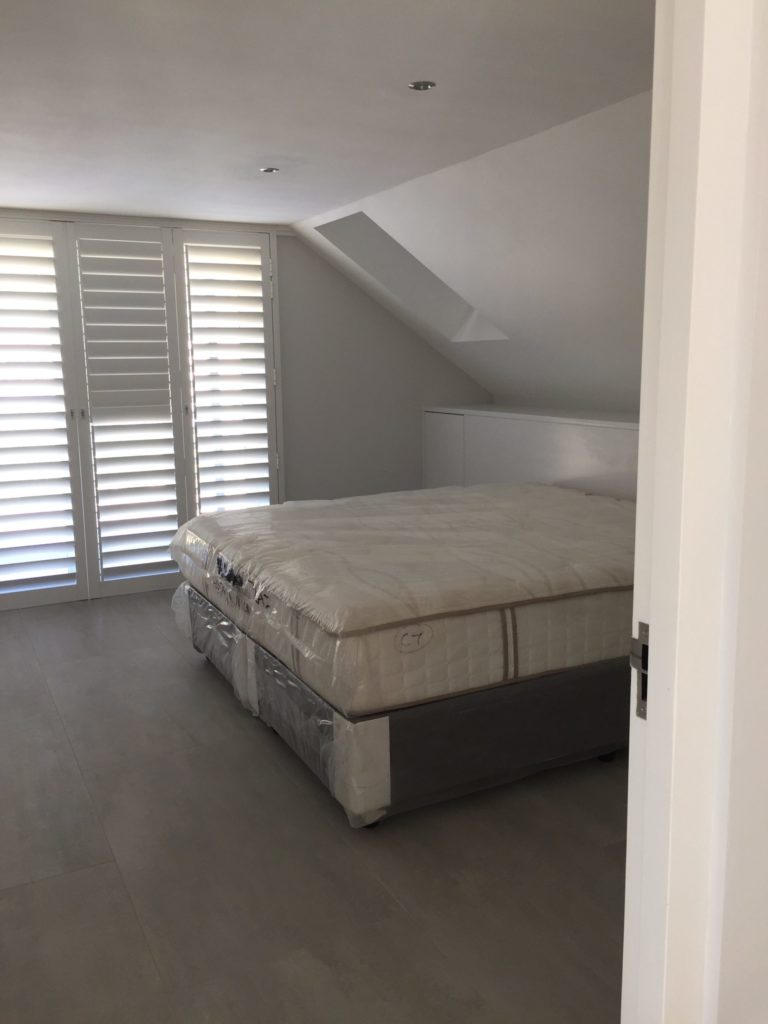
Initially we received a Notice of Motion in June 2019. The Applicant (the developer) wanted us to remove the bed from our upstairs bedroom. Alternatively we had to allow the Applicant to remove the bed. They believed that without a bed in the room the Building Inspector would issue an Occupation Certificate. The Applicant even stated they would replace the bed after the occupation inspection! Certainly they believed they could mislead the Building Inspector into seeing the bedroom as a NON-HABITABLE attic.
However:
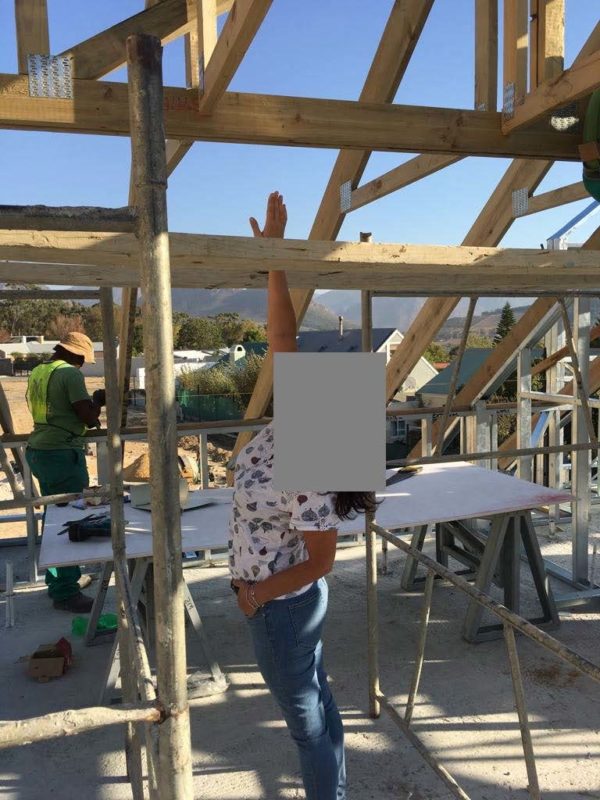
- The Building Inspector told the developer during 2 previous inspections that the bedroom ceiling was too low.
- The municipal Approved Building plans have the upstairs room as a bedroom. Therefore the room must conform to SANS10400 regulations for a habitable space.
- In the Approved Building plan the upstairs bedroom has the correct ceiling height and exposed wooden trusses.
So, removing the bed was NEVER going to result in an occupation certificate.
- With or without a bed, the room must have a ceiling height no less than 2400mm.
This was vexatious and frivolous litigation to force us to accept the house as built. But we paid for a 3 bedroom house, not a 2 bedroom house with a storage room. Was this Notice of Motion a mere Stalingrad tactic to avoid arbitration?
We had to respond and this we did according to the rules of court.
Amending the Notice of Motion
In December 2019, the Applicant decided to Amend their Notice of Motion. They removed all reference to removing the bed. Instead they pleaded for 10 weeks uninterrupted access to do remedial works to the house.
- Surely this confirms that the first NOM was both frivolous and vexatious?
- We had already given them 10 weeks so was this merely a Stalingrad tactic to further delay going to arbitration?
This plea for 10 weeks was more than 2 and a half years after the house should have been completed. In all that time the developer had free entry into the house to do as they pleased. (We do not and may not live in the house.) They had their own set of keys … until the lost them. The Applicant refused to tell us what they intended to do for the 10 weeks and what problems they would address. They would not even inform our legal representatives of their intentions.
We couriered a new key to the applicant’s legal representative who is their nominated domicillium. The legal representatives refused to accept the key! When it was pointed out that they are the nominated domicillium they had no choice but to accept the key.
10-Weeks and Covid-19
We gave the developer the 10 weeks. After all we wanted the house repaired and an occupation certificate issued.
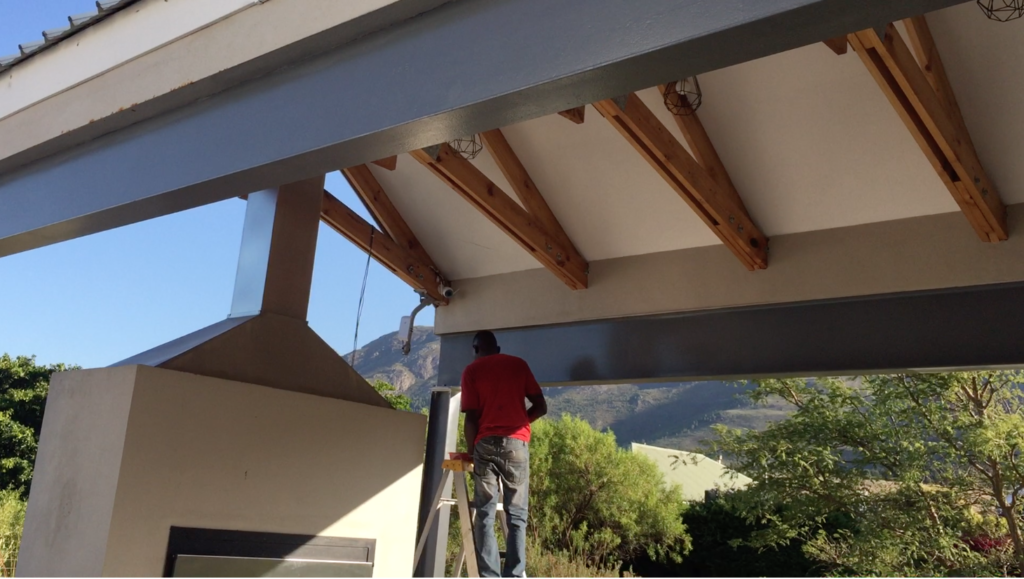
The 10-weeks began on 10 February 2020 and was due to end on 17 April 2020. Covid-19 lockdown came into effect on 27 March 2020. At that time 7 weeks had lapsed. In 7 weeks the ONLY jobs the developer did was to pump water out of the cellar and paint an I-beam. That shows what little intent they had to fix the many snags in the house.
The amended NOM was nothing short of Stalingrad tactics through vexatious and frivolous litigation. The developer preferred to litigate rather than actually repair the house. Ultimately they were avoiding arbitration by any means.

After lockdown
Meanwhile, on 01 June 2020 lockdown eased and builders returned to work. However, no one returned to the house.
Urgent Notice of Motion
On 11 June 2020 we received an Urgent Notice of Motion. The applicant used the same case number as the case for removing the bed. But here they altered the respondents and completely changed their pleadings. They failed to apply to the court for a joinder for the new respondent but somehow the judge accepted that.
Now the first respondent was a sub-contractor employed to damp-proof the cellar. The developer wanted to order the sub-contractor back to site. As I’ve learnt, sub-contractors rely on being given correct information. This contractor had done way more work than their original understanding of the remedial work required. The builder built the cellar so badly there was honeycombing in the walls. Water continually found its way through the honeycomb no matter how much chemical was pumped into the walls. As first respondent they decided for financial reasons not to oppose the motion. (Update in June 2021 – this contractor has now gone into liquidation.)
A Further 7-Weeks
The builder/developer also requested a further 7 weeks access to the house. This was now 3 years after the house should have been complete. No reason was given as to why the builder needed 7 weeks. We opposed. The repeated requests for more time was most likely Stalingrad tactics to push out arbitration and wear us down completely.
The Judge dismissed the plea for extra time and ordered the damp proofers back to site for 4 weeks. The time granted was to complete the cellar remedial work. But the damp proofers were fired and never returned. Instead the developer/builder spent 4 weeks doing patch-up jobs in the house. A new water proofer was appointed to fix the cellar.
The developer paid no attention to the Judge’s order. Does this contempt of court re-affirm the vexatious nature of the litigation served on us?
What Happened to the Costs Order?
Two draft orders were presented to the judge. Both orders had a cost award and yet the final order had no order as to costs. Very strange to win and yet to have to pay for the pleasure!

Removing rubble during remedial work July 2020
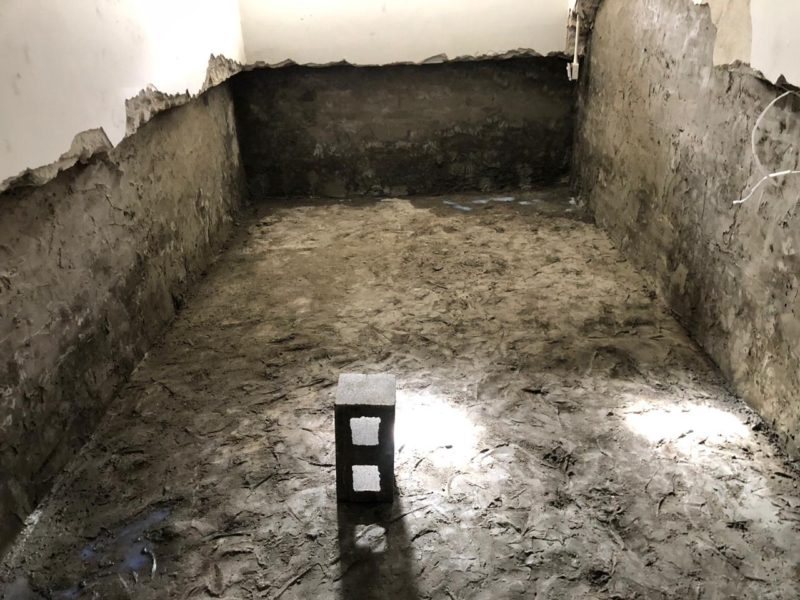
20200702 cellar works

20200715 digging sump

20200701 rusty beading removed
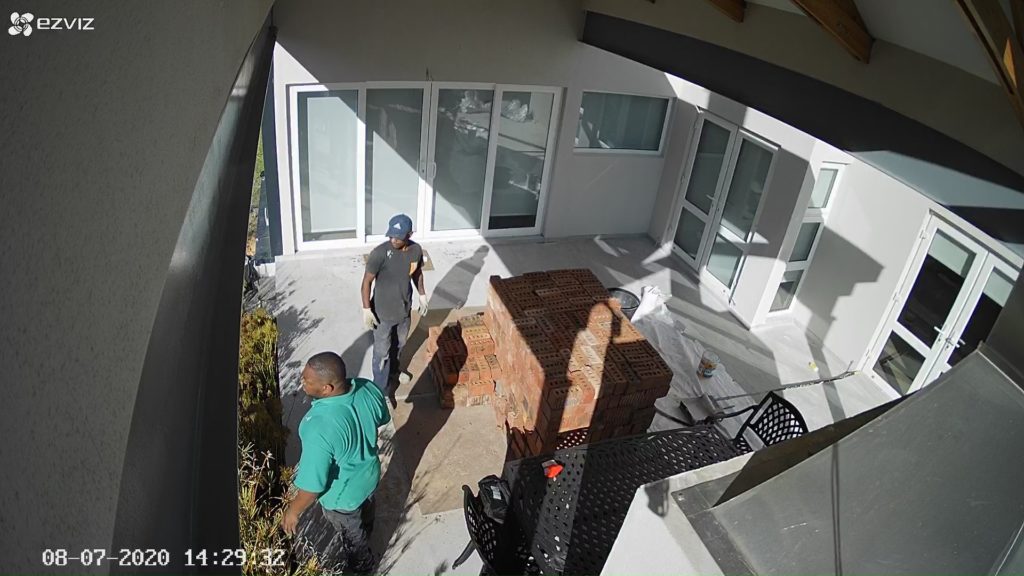
Bricks stored on patio to rebuild the internal cellar wall
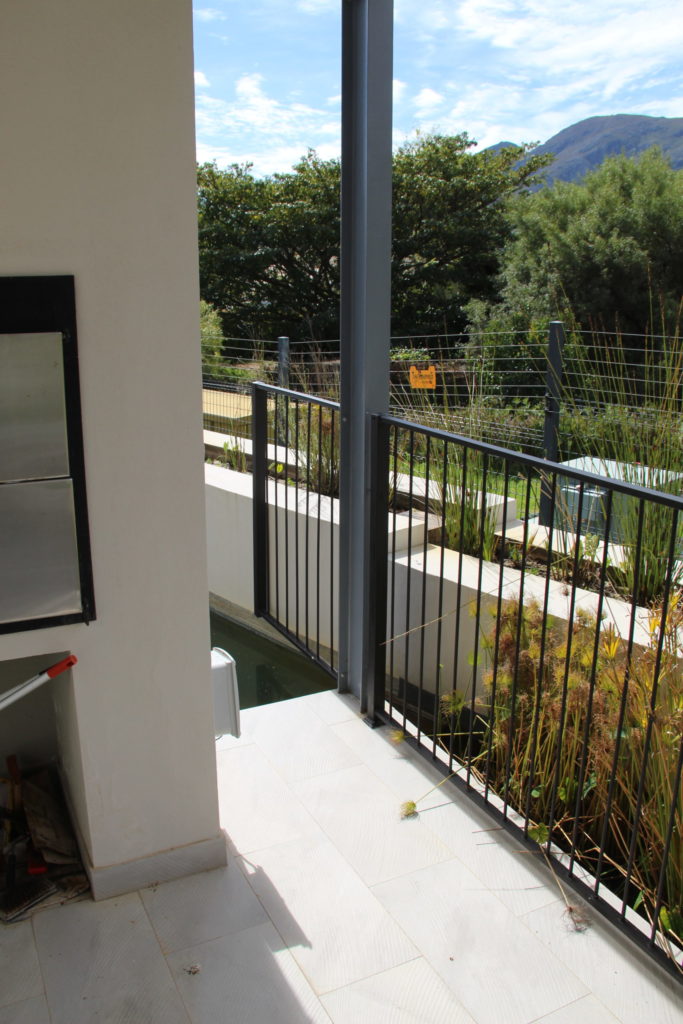
Fence installed by builder leaves no access to the reed bed
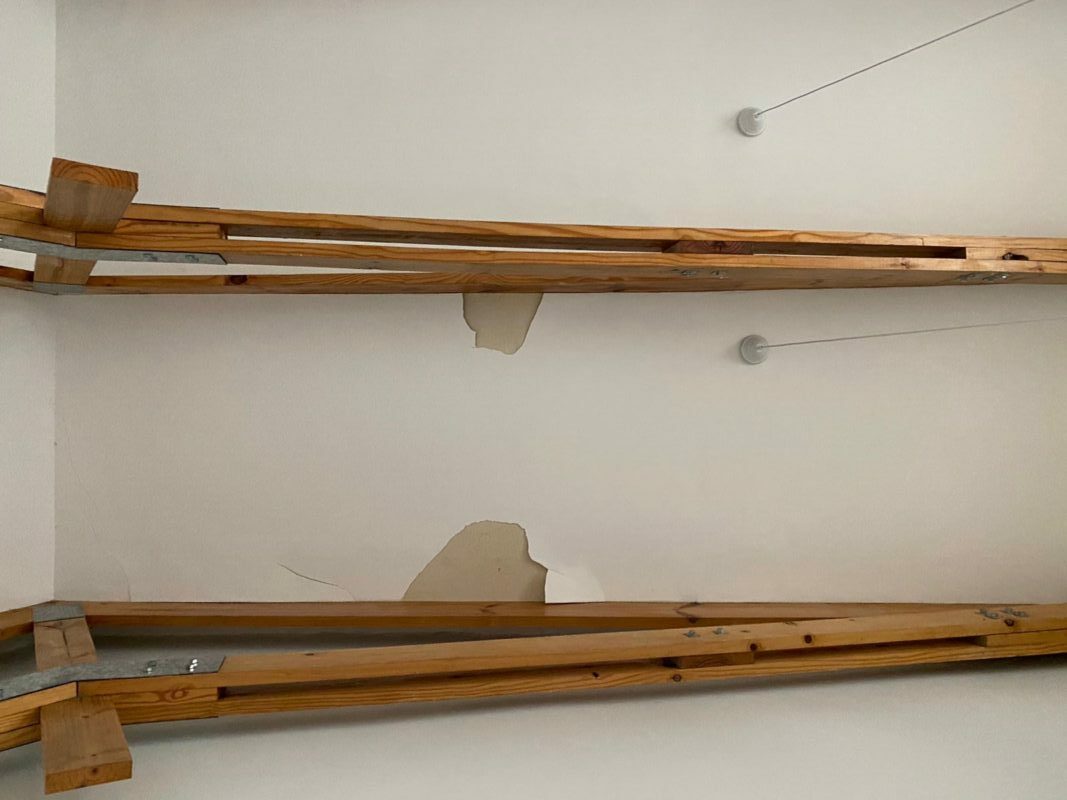
20220601 bedroom ceiling
Avoiding Arbitration
The developer had avoided arbitration through vexatious litigation. But the Building Agreement has an arbitration clause for dispute settlement.
For months they hid behind the first Notice of Motion saying all matters in the arbitration were sub judice. Finally the excuses ran dry. Quite simply, they did not want to be judged by a peer in the building industry and not a peer who had inspected the house.
Going into Arbitration
In July 2020 the developer decided to attend the Pre-Arbitration meeting. But this was not the end of Stalingrad tactics. A few days before the meeting the developer attempted to appoint their own arbitrator. The Building Agreement states the arbitrator must be appointed by the Building Industries Federation of South Africa (BIFSA). As BIFSA no longer exists the Master Builders’ Association fulfils that role. The action to appoint their own arbitrator was in direct conflict with the dispute resolution clause that they had written into the building agreement.
For the next few months we prepared our Statement of Claim. During that time we appointed a Quantity Surveyor and an Engineer to get the independent reports needed. The quantum of the Bill of Quantities is R1,83million. (Each year the quantum increases and now stands at about R2,5million.) The Engineering Analysis Report is scathing on the quality of workmanship in the house. As the cost of legal representation was prohibitive, we decided to represent ourselves.
Point in Limine
The developer received our Statement of Claim and objected to certain claims. They made no legal argument for their objection so the aribitrator ruled that the claims fell within his jurisdiction.
The Onslaught Continues
What is truly unbelievable is that with all these notices of motion the developer/builder and their legal team have won nothing from us. Why continue? Is there a more sinister reason than pushing out the arbitration? Who knows? Time will tell.
Urgent Notices of Motion
02 November 2020
The developer took the Municipality, Architect and NHBRC to court. The matter was thrown out as not urgent and given a date to be heard 25 January 2021.
The NHBRC had suspended the developer on 17 March 2020. The developer claimed that they needed an occupation certificate for our house in order to be re-instated. They also said in their affidavit they were busy building 4 houses on the estate and had 25 employees.
- There never was any connection between an occupation certificate for our house and NHBRC re-instatement.
- The developer was NOT busy building any houses on the estate.
- At the time, the municipality did not have any approved building plans for the developer.
- Nor did the developer have 4 house builds enrolled with the NHBRC (National Home Builders Regulation Council).
- Without any building, the developer certainly did NOT have 25 employees.
26 November 2020
The developer wanted the arbitrator removed. He was the first respondent, we were respondents 2 and 3.
The developer did not like the arbitrator’s ruling on his jurisdiction to rule on certain claims. The developer also wanted those claims removed from arbitration altogether. Was this the ultimate Stalingrad tactic to avoid arbitration?
We represented ourselves. For a detailed account of this matter see 4 December 2020 Urgent Motion.
The judge made a ruling without hearing our side. He knew we were opposing and we had filed our papers according to the rules of court. But we were not heard.
We are applied to the court to have the matter rescinded which it was.
25 January 2021
The Court heard the matter involving the municipality, architect and NHBRC. The judge threw the case out of court. In short, his reason was that we had not been included. The developer did not have the locus standii to bring the case when it is our house. So they opened a new case.
29 January 2021
This time the respondents are the municipality, the architect and us.
The developer objected to the approval of the As-Built plan being for the swimming pool only. In November 2017 the developer submitted a rider plan to the municipality. The plan included numerous changes but the application was only for a minor change to the swimming pool. Moreover, the developer only paid for a minor change. The approval, dated 05 July 2018, is for the swimming pool only.
The time limit for objections to building plan approvals and refusals is 90 days. This objection was more than 900 days later.
Now the developer was asking the court to approve the plans in full.
Really, is this not just vexatious and frivolous litigation? The case has not been heard although the developer’s legal team mischievously got the case on a court roll without informing the respondents. It was removed.
Definition of A Vexatious Litigant
Cliffe Dekker Hofmeyr
A vexatious litigant is a person who persistently initiates legal action for the purposes of harassing or subduing an adversary. Unfortunately, the victims of these vexatious litigants cannot simply ignore the frivolous legal proceedings instituted and are forced to respond in accordance with the rules of court regardless of how ridiculous the claims may be.
To read the full article click here Cliffe Dekker Hofmeyr on Vexatious Litigants
The applicant can make an application to court for an order declaring the respondent a vexatious litigant. The effect of this is that the respondent can no longer institute legal action in any court against the applicant without leave of the court.
Kisch IP
There is another article by At Van Roy and Izaan Kuschke of Kisch IP which goes into more details on the Ersatz Litigant.
… if you are an ersatz litigator – you lose once, you try again, regardless of merit and good faith. The notorious second, third and fourth bite at the cherry. Litigation is an expensive exercise .. especially in view of .. risk all too common in litigious proceedings. More often than not a party (regardless of merits) has to throw in the proverbial towel due to the continuous and incessant plundering of resources by the ersatz litigation …
At van Rooy is a Director and Patent Attorney at Kisch IP. Izaan Kuschke is an associate at Kisch IP’s patent department. She is an Assistant for the University of Pretoria’s Centre for Intellectual Property Law.
Conclusion
It seems the law tries to avoid piecemeal litigation. But does this work? Res judica should protect a party from being “twice harassed”. But we are looking at the umpteenth bite at the cherry by this litigious developer and her very piecemeal litigation.
If high profile cases like Jacob Zuma’s get away with Stalingrad tactics, then is there any hope that justice will prevail? One hopes justice will prevail. There are some very good judges in our courts: all strength to them. Our nation’s moral compass rests heavily on their shoulders.

Share your story
If you have been the victim of vexatious and frivolous litigation, share your story.
Recent Comments